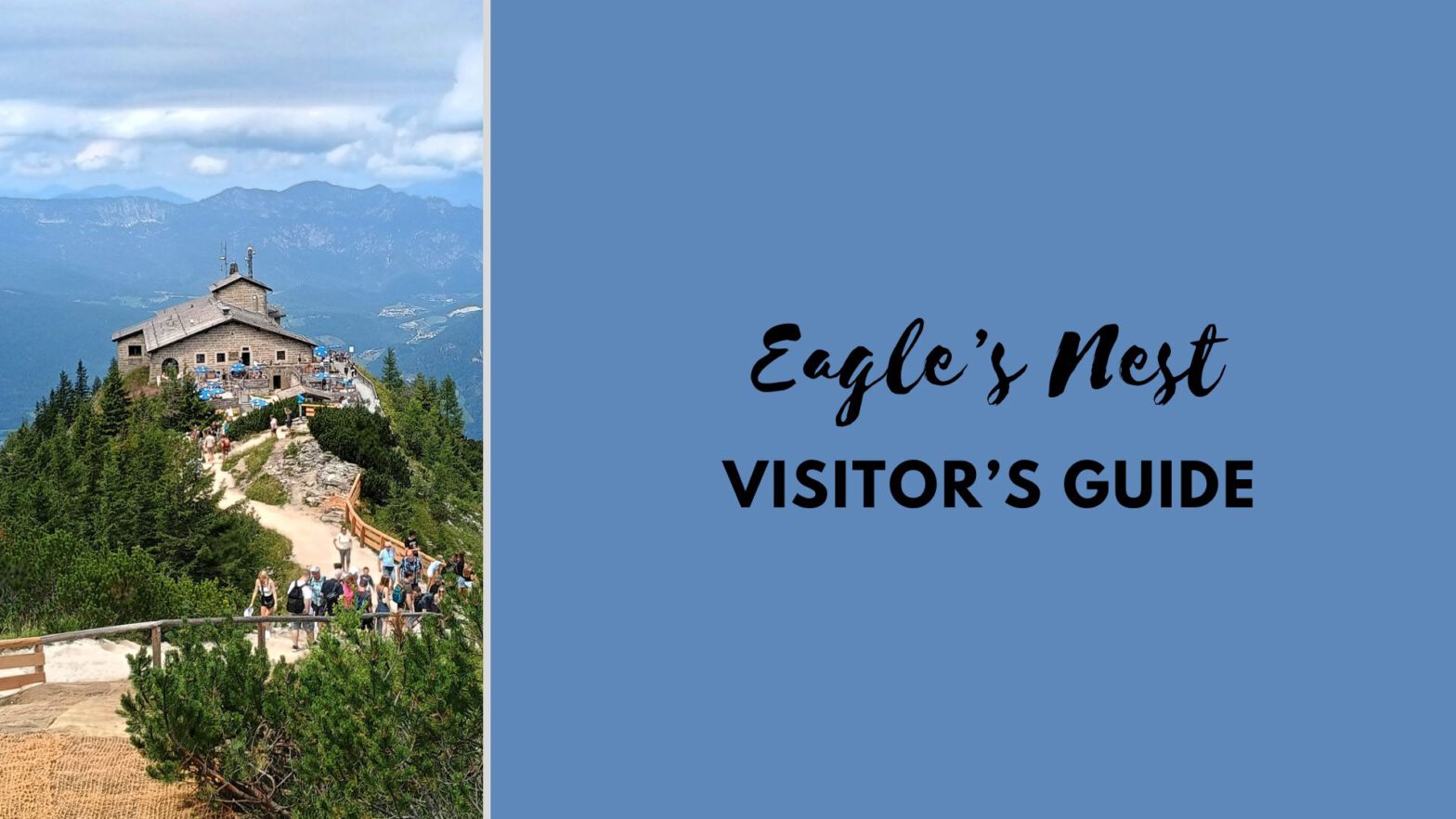
The Eagle’s Nest is a popular tourist destination in Bavaria – thanks to its stunning location, but also due to its history. Erected by the Nazis as a tea house in the late 1930s, the building today is a restaurant.
In this guide, you will learn all about what the Eagle’s Nest actually is, how relevant it is for Nazi history (or not) and how you can visit today.
This guide contains a link to a company for which I work on a freelance basis. However, this is not a sponsored post. I do not earn anything from this post or from any purchase you may make by clicking on any link.
Eagle’s Nest vs. Obersalzberg: What’s the Difference?
Eagle’s Nest and Obersalzberg are connected, but they are not the same thing. Let’s look at what the „Eagle’s Nest“, the „Obersalzberg“ and the „Berghof“ actually were.
This is just a short overview. I have a longer post on Eagle’s Nest vs. Obersalzberg: What’s the Difference?
What Is the Eagle’s Nest?
The Eagle’s Nest (official name: Kehlsteinhaus) is a small(ish) building on a mountain ridge. It was constructed during the Nazi period and was used primarily as a tea house and to impress high-level visitors. Being a propaganda instrument rather than of real strategic importance, it is not hugely relevant in terms of Nazi history.
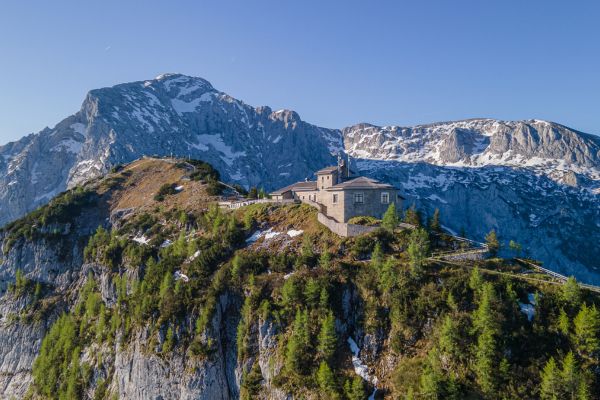
© Bergerlebnis Berchtesgaden
Hitler himself was a rare presence, with only 14 documented visits. That said, his partner, Eva Braun, liked to use the building to hang out with her friends.
The Eagle’s Nest was not destroyed during the war because it was too small a target. Therefore, pretty much everything you see there is original.
Today, it is a used as a restaurant and is a popular destination for visitors.
What Is the Obersalzberg?
The Obersalzberg is a former village above the town of Berchtesgaden. During the Third Reich, the area became off-limits to normal people – nobody could enter without a special permit.
The Obersalzberg became a second government seat. Hitler ended up spending a fourth of his time in office there. That’s three years in total! A great number of very important decisions were made here before and during the war.
In terms of Nazi history, the Obersalzberg is a very relevant place.
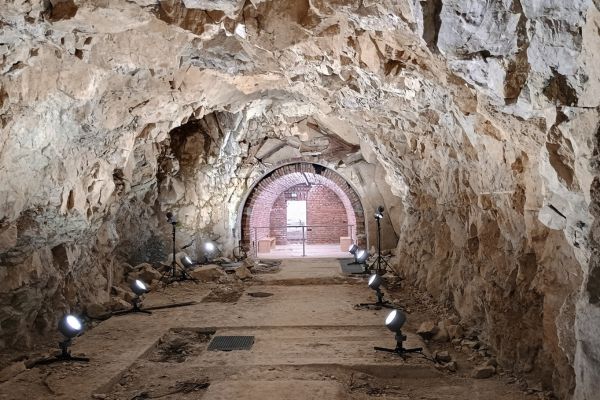
Today, none of the original buildings remain with the exception of the bunker system.
What Was the Berghof?
The Berghof was Hitler’s actual residence on the Obersalzberg.
In case you haven’t worked it out yet, the Berghof and the Eagle’s Nest were not the same building.
Having purchased a small holiday home in 1933, Hitler gradually extended it until it became a rather massive building. How massive exactly? So massive that the panoramic window in its main wing was about 40 feet wide!
The Berghof was damaged during an air strike towards the end of the war. A few days later, the SS burned it down.
The ruins were bulldozed at the request of the US Army in 1952. Today, only its back wall remains.
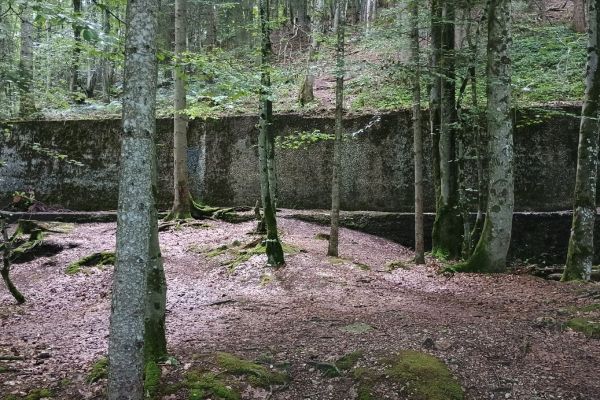
If you have seen any 1930s photos of the Berghof, you may be wondering if this is really the same site. Yes, it is. It just looks completely different. For instance, none of the trees shown in the photo above existed before 1945.
Which Sites Can You Visit Today?
Today you can visit the following sites:
- Obersalzberg Documentation Center
- Parts of the bunker system built underneath the entire Obersalzberg (accessible via the Documentation Center)
- the site of the former Berghof, Hitler’s residence on the Obersalzberg
- the Eagle’s Nest on the Kehlstein mountain (weather permitting)
The History of the Eagle’s Nest
The Eagle’s Nest was constructed in 1937/38. Within just 13 months, work crews blasted a road, tunnels and an elevator shaft into the mountain and erected the building itself.
Contrary to popular beliefs, the Eagle’s Nest was not a present from the party to Hitler for his 50th birthday.
Even if it had been, it would not have been a highly appreciated present. Hitler didn’t like the Eagle’s Nest – he had a fear of heights and worried about safety, particularly about the elevator being struck by lightning. Therefore, he was not a frequent visitor. In total, only 14 visits have been documented.
His partner, Eva Braun, spent more time up on the Kehlstein, using it as a hang-out spot with her friends.
Unlike the Obersalzberg buildings, the Eagle’s Nest was not hit by Allied bombs and therefore remains (mostly) in its original state.
In 1952, the Eagle’s Nest was repurposed as a restaurant and remains in operation today. The Eagle’s Nest is the property of the State of Bavaria and one of the region’s most heavily visited sites.
Where Is the Eagle’s Nest?
The Eagle’s Nest (Kehlsteinhaus) sits on the Kehlstein mountain above the town of Berchtesgaden in the southeastern corner of Germany. With its location right on the German-Austrian border, it is closer to Salzburg than to Munich.
You can see the Eagle’s Nest from the valley road but it’s teeny tiny – it’s really high up. Berchtesgaden’s elevation is ca. 572 meters (1,877 ft), the Eagle’s Nest’s is 1,834 meters (6,017 ft).
Here’s a map to show you the lay of the land:
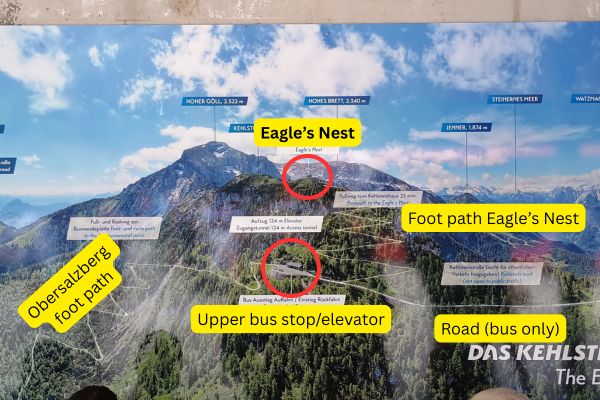
You can see the elevation difference between the upper bus stop and the Eagle’s Nest (both circled in red). The road approaches from the right, the footpath/mountainbike trail from the left. There is another footpath on the right above the road that connects the bus stop and the Eagle’s Nest.
How to Get to the Eagle’s Nest
First things first, you cannot drive to the Eagle’s Nest. You have to go to the Obersalzberg Documentation Center and catch a bus from there (or walk up).
This is how you can reach the Obersalzberg …
By Car
Drive towards Berchtesgaden and then to „Dokumentation Obersalzberg“. There are large car parks available.
Continue your journey by bus or on foot.
By Public Transport from Munich
Catch a regional Salzburg-bound train to Freilassing. Change to S4 towards Berchtesgaden.
Once you reach Berchtesgaden, find the central bus station. It’s right outside the train station.
Bus 838 will take you to the stop „Dokumentation Obersalzberg“.
The journey will take a good three hours. You can use the Bayern Ticket for your entire trip with the exception of the special bus service explained below.
By Public Transport from Salzburg
From the old town, catch bus 840 (direction: Jennerbahn) to stop „Schießstättbrücke, Berchtesgaden“. Change to bus 838 (opposite side of the road) to arrive at „Dokumentation Obersalzberg“.
If the bus is running on time, you can also change at the Berchtesgaden train station.
Ask the driver in case of any questions.
This trip should take just under 90 minutes.
Guided Tours from Munich
Guided day trips by coach, operated by Grayline by Autobus Oberbayern, leave Munich a few times a week. Read here about what to expect on a guided tour.
I work for this company as a tour guide, but this is not an affiliate link and I will not earn anything if you book.
Guided Tours from Salzburg
Guided tours from Salzburg are operated by Panorama Tours and run daily from May 8 to October 31.
I am not affiliated with this company in any way.
Eagle’s Nest Tickets
You cannot drive to the Eagle’s Nest. In order to get there, you have two options: You can take a special bus and elevator, or you can walk.
Walking takes about four hours.
Most people choose the bus and elevator. If you are on a tour, the bus ride and elevator are either included in your tour price, or you can purchase tickets through your guide.
Bus & Elevator
A special bus takes you from the Obersalzberg to the foot of the Kehlsteinhaus where an elevator awaits you for your final ascent. This is not a regular public bus, so any ticket you may be holding including the Bayern Ticket is not valid on this bus.
For this special bus, you need to buy a special ticket. The elevator ride is also included in your bus ticket.
The buses run on a fixed schedule. Spaces are limited. Because of the steep mountain road, they require (pretty much) everybody to be seated during the journey. That makes the bus ride a lot more relaxed than, for instance, the shuttle bus at Neuschwanstein. But it limits the number of available tickets.
Therefore, you cannot just take any bus you like. You must choose a time for your journey. You are also assigned to a specific bus (up to six buses will run simultaneously) for the trip up to avoid overcrowding.
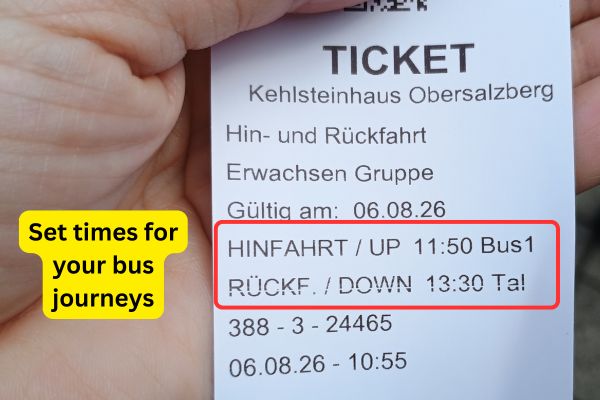
On the return, you can board any bus (except those reserved for tour groups).
Online booking is strongly recommended, especially in high season. You can also buy tickets on site, but there may be lines and waiting times.

Click here for a more detailed article about the Eagle’s Nest „Last Mile“: Bus & Tickets.
Hiking (or Mountainbiking) to the Eagle’s Nest
If you prefer physical exercise, you can hike (or bike) up at no charge. It’s about 5.5 kms (3.1 miles) one way. Expect to spend approximately four hours on the ascent, with many switchbacks.
You will be walking on a separate trail to reach the Eagle’s Nest. The road on which the buses drive is not open to any other traffic, including bikes and pedestrians. This is for safety reasons. Once you’ve seen it, you know why.
Avoiding the Elevator
The Eagle’s Nest elevator is very spacious (it was built for a dictator, remember!). But if you prefer to avoid it, you can also walk up from the upper bus stop to the Eagle’s Nest.
To do so, walk back along the road in the direction you just came from. After just a short distance, a paved footpath will branch off to the left. It will take you around 25-30 minutes to reach the Eagle’s Nest on this (rather steep) path.
Eagle’s Nest Opening Hours
The Eagle’s Nest is only open from early May to early November, weather permitting.
Opening hours from May to the end of September: daily from 8:30 AM to 4:50 PM.
Opening hours in October and November: daily from 8:55 AM to 4:00 PM.
The Eagle’s Nest may be closed at any time in case of inclement weather, falling rocks etc.
What to Expect During Your Visit
Your visit starts with a 15-minute bus ride along one of Germany’s most spectacular mountain roads. Along the way, you will pass through five tunnels and just one switchback – to cover an elevation gain of about 850 meters (around 2,800 feet).
Once the bus drops you off, you walk through a 124-meter-long tunnel until you reach a brass elevator. This elevator takes you up to the Eagle’s Nest in just 41 seconds.
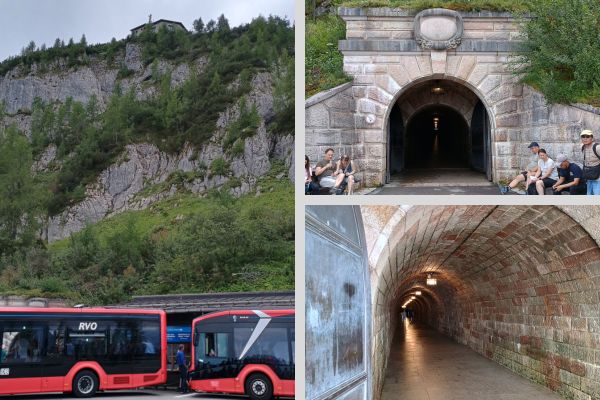
You arrive inside the building, and pretty much directly walk into the present-day restaurant. Walk through three rooms and along the sun terrace to reach the back patio.
From the back of the building, you can walk towards the cross that was erected as a memorial to all the victims of WWII, and beyond.
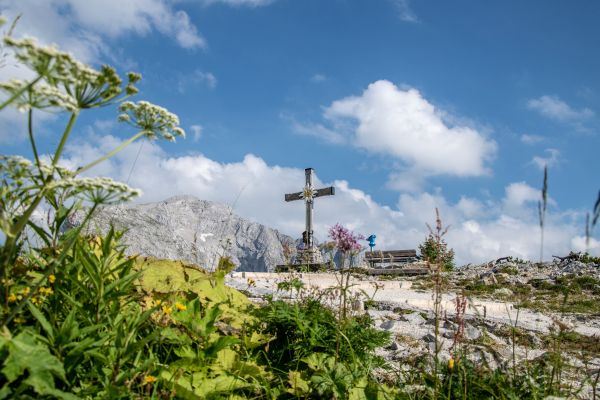
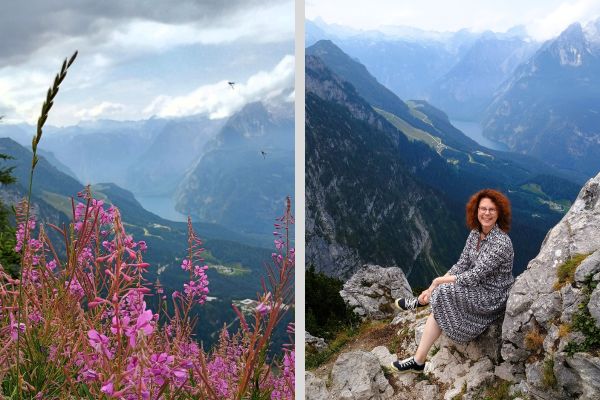
You will get some spectacular views of Königssee (King’s Lake) and Mt. Jenner on one side, and Salzburg on the other side.
Is the Eagle’s Nest Worth Visiting?
Yes! Just be sure you know what you are getting.
At the Eagle’s Nest, you are getting a little bit of Nazi history and a lot of views.
If your main interest is in Nazi history, you will be better off visiting „just“ the Obersalzberg Documentation Center.
Best Time to Visit
Personally, I would recommend visiting only in good weather. If it’s raining, or cloudy, you won’t see much of the surrounding mountains. If it’s windy, it might be too dangerous to walk outside the Eagle’s Nest. You’re high up on the mountain and might get blown off your feet. Though I suspect the Eagle’s Nest will be closed in such weather anyway.
In spring, there may still be snow on the ground, and definitely on the surrounding mountains.
In early summer, you will see lots of wildflowers. They only have a short window of opportunity at this elevation.
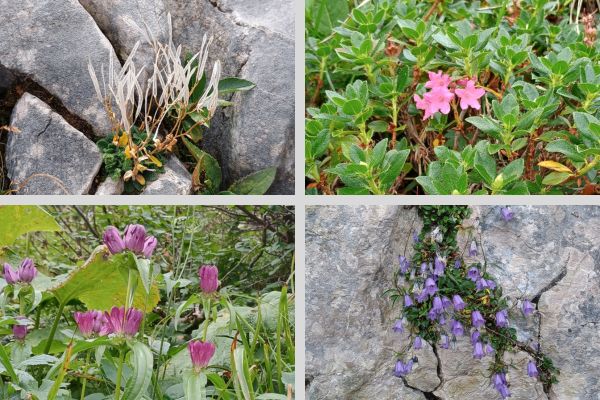
In the fall, enjoy the colors.
You cannot visit in winter. The access road is closed.
Things to Know Before You Go
Walking/Mobility
A visit to the Eagle’s Nest involves a little bit of walking, or maybe even a lot.
To visit the building itself, all you need to be able to do is board the bus and walk the 124 meters (407 feet) to the elevator. Inside the building, there are a few stairs, e.g., to the former dining room.
There is more to see outside, but paths are unpaved and sometimes rocky. There are also several stairs.
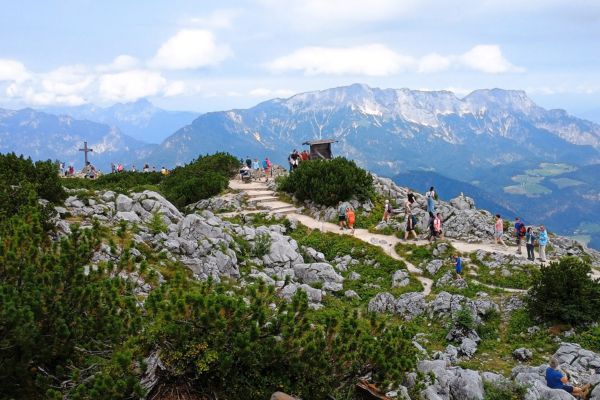
Even if you are not easily walking on uneven ground, you can enjoy some spectacular views from the Eagle’s Nest windows, too.
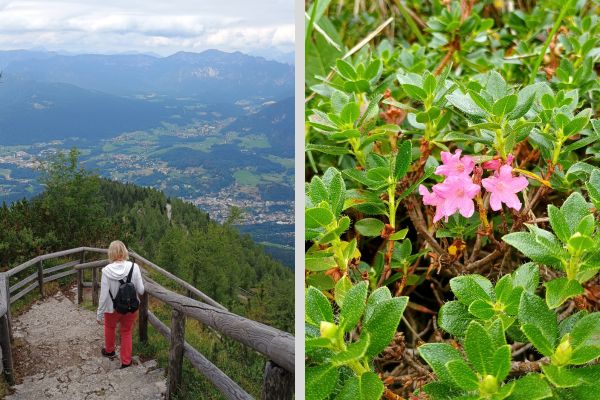
The footpath from the upper bus stop to the Eagle’s Nest is steep, somewhat uneven and has a number of stairs.
Weather
You are in the mountains, where the weather may change at a moment’s notice. Even if it’s sunny when you set out, clouds may be coming in very suddenly.
Clothing
Even on the hottest day of the year, you may want to bring a sweater or a scarf. The Eagle’s Nest sits at an elevation of 1,834 meters (over 6,000 feet). It will be cooler up there than in the valley. If it’s windy, it may be uncomfortably cold.
Footwear
If you are planning to go beyond the cross, please wear at least closed-toe footwear with some sort of grip. The limestone rocks are worn and slippery in places.
If you are planning to take the footpath from the upper bus stop to the Eagle’s Nest or back, closed-toe shoes with some grip are equally advisable.
Food
The Eagle’s Nest today is a restaurant. There is plenty of food (mostly Bavarian fare) available.
Toilets
Toilets are available on all three „levels“:
- at the Obersalzberg,
- next to the tunnel entrance at the upper bus stop,
- at the Eagle’s Nest itself.
Accessibility
The Eagle’s Nest is partially accessible by wheelchair.
You must have a wheelchair that can go on a normal bus (i.e., if it is extra big, it may not fit through the doors). The elevator will whisk you directly up to the building itself.
The former dining room with the red-marble fireplace is not accessible due to stairs.
You will not be able to go anywhere outside the building, including to the cross.
You can also book a private tour with a specialised operator such as SBS Fahrdienst (website in German only).
Eagle’s Nest FAQs
Can You Drive to the Eagle’s Nest?
No. You must take a special bus from the Obersalzberg Documentation Center, or walk.
How Long Should You Plan?
From the time your bus leaves from the Documentation Center bus stop, allow about 30 minutes to reach the Eagle’s Nest by bus and elevator. By default, your ticket comes with a 2-hour stay. (You can change this if you wish. There are kiosks available at the Eagle’s Nest to rebook your time, subject to availability.)
Allow another 30 minutes to reach the Documentation Center. If you would like to walk downhill from the Eagle’s Nest to the upper bus stop, allow 20 minutes (plus 15 minutes for the bus ride). It’s a very pretty walk.
Is the Eagle’s Nest Suitable for Children?
If your kids enjoy the outdoor and like to scramble on rocks, they will surely love the area behind the building.
Relatively little information about the Nazi period is provided at the Kehlsteinhaus. As such, you don’t have to worry about how to explain the Nazi atrocities to your children.
Can You Visit in Winter?
No. The Eagle’s Nest is only open between early May and early November.
Is it Worth Visiting from Salzburg?
Absolutely! By public transportation, you can reach the Obersalzberg in about 90 minutes.
Is the Eagle’s Nest Wheelchair Accessible?
Yes, to a degree.
Wheelchairs can go up on the bus and elevator, but are limited to the building and panoramic terrace.
How Much Walking is Involved?
A little bit or a lot. It all depends on you (and the weather).
If you are not very mobile, you can visit the Eagle’s Nest itself and the restaurant. You must, however, be mobile enough to get yourself into and off the bus and down the 124-meter (407 ft.) tunnel to the elevator.
If you are mobile, you can walk towards and beyond the summit cross for special views.
If you are very mobile (and fit), you can walk up and down from Berchtesgaden or from the Documentation Center. This will take several hours.
Can You Stay at the Eagle’s Nest?
No. The Eagle’s Nest was never sit up to accommodate overnight visitors, and it does not accommodate anyone today.
You can, however, stay on the Obersalzberg. The 5* Kempinski Hotel Berchtesgaden will be glad to welcome you if your pockets are deep enough. It sits partially on the grounds formerly occupied by Hermann Göring’s house.
Final Thoughts
The Eagle’s Nest makes for a great excursion in one of Germany’s most scenic areas.
Just don’t expect too much Hitler stuff up there. The Eagle’s Nest was a tea house and propaganda instrument, not an actually lived-in building.
In my opinion, the most interesting aspects of the visit are
- the engineering – a road ascending almost 3,000 feet with just one switchback, a building perched high on a mountain, an elevator right through rock,
- the views of Königssee and the surrounding mountains.
If your main interest is Nazi history, you will find more information at the Dokumentation Obersalzberg than at the Eagle’s Nest. The Obersalzberg is the more relevant site, historically speaking.
2 Kommentare