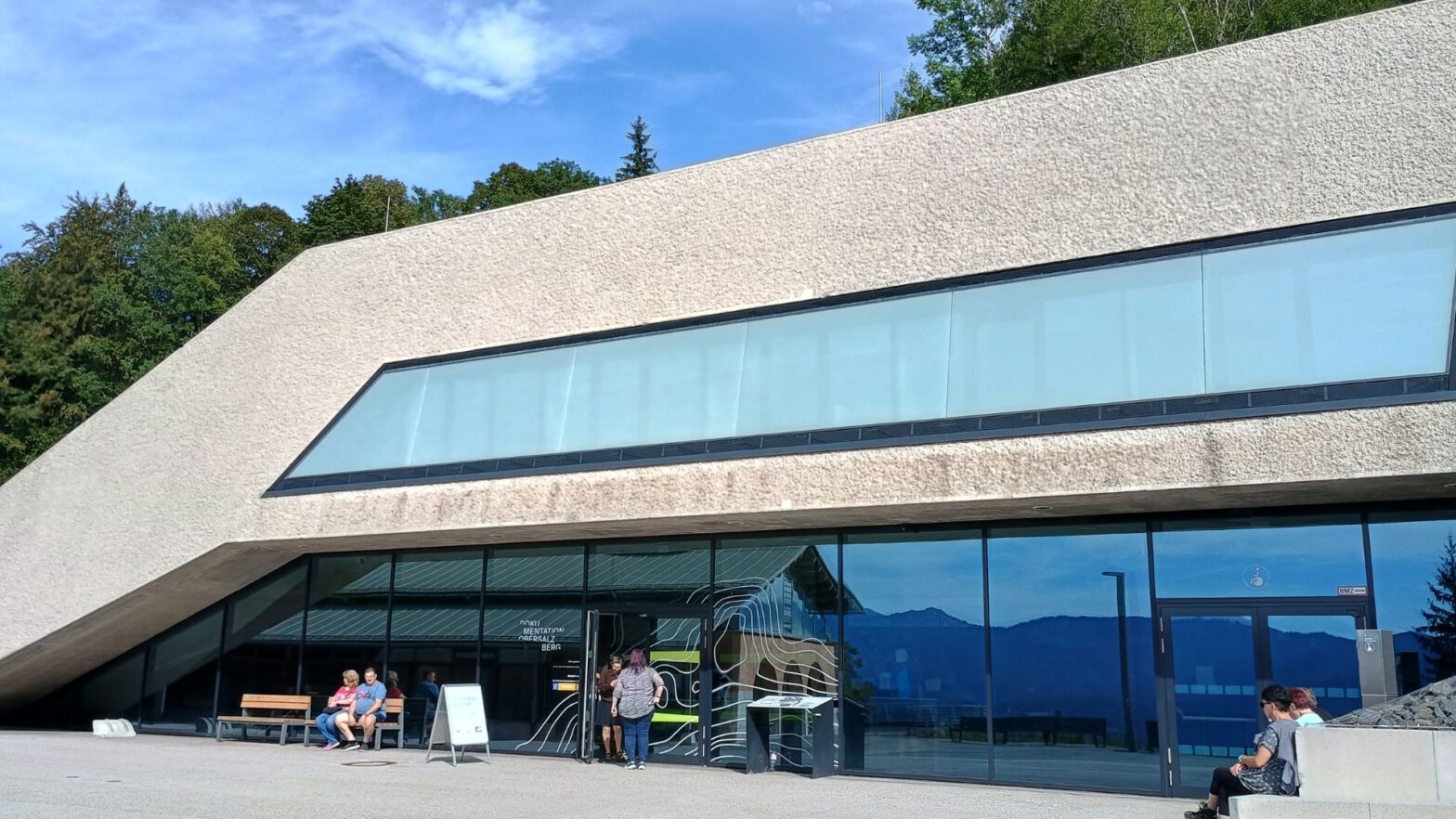
Everyone has heard the name „Eagle’s Nest“, but very few people understand the actual historical significance of this buildings and the Obersalzberg. Enter the Dokumentation Obersalzberg. This documentation center does a great job explaining the massive Nazi presence in this little corner of Germany and the historical significance of the people who spent time here.
Many international visitors come to the southeastern corner of Germany in order to visit the Eagle’s Nest. While this is a prominent and visually impressive site, it is primarily a building, a tea house used today as a restaurant. Head to the Dokumentation Obersalzberg to understand the historical context of the Obersalzberg area.
Read on to learn what the Dokumentation Obersalzberg is, what information it presents, and whether it’s worth visiting.
What Is Dokumentation Obersalzberg?
Dokumentation Obersalzberg is a documentation center about what happened on the Obersalzberg before, during and after the Third Reich.
This documentation center is housed in a modern building on the Obersalzberg. If you or any of your friends and family ever stayed at the General Walker Hotel: the Dokumentation is just downhill from where the hotel used to be. (No, the hotel does not exist anymore.)
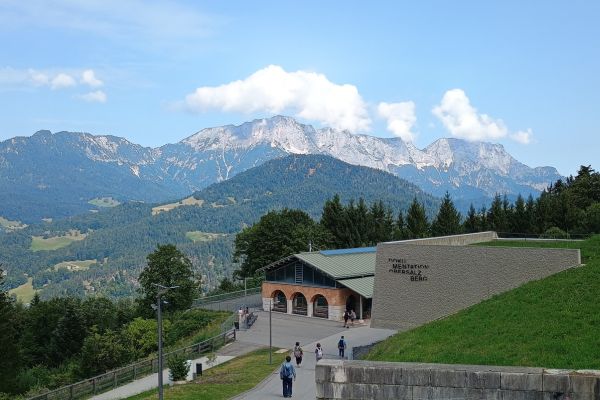
Is it a museum? Well, no. In Germany, we avoid the term „museum“ for this kind of place, for obvious reasons. And we certainly do not try to be fun. Expect an evidence-heavy presentation of facts.
Why Is Obersalzberg Historically Important?
A former mountain village, the Obersalzberg effectively became the second seat of government during the Nazi era. Hitler, who owned a substantial home here, spent a fourth of his time in power here.
Propaganda tried to make the Obersalzberg look like a holiday resort. But the off-limits area was much more than that. A large number of important decisions were made here: about the attack on Poland, about war strategies, about the Shoah.
The bunkers were built so the regime could continue to govern even if Berlin fell. Yes, they thought they would just keep going.
The Obersalzberg also served as a propaganda tool, painting Hitler as a man of the people (which he was not) and serving to soften the image of the dictator and his regime. Who would expect evil in such beautiful surroundings?
Is Dokumentation Obersalzberg Worth Visiting?
Yes, absolutely!
Dokumentation Obersalzberg is key if you want to really understand the significance of the entire area.
Personally, I had heard about the Obersalzberg, but I had had no idea just how important this place had been politically. I always assumed it was just where the Nazis would spend their summer vacation.
What Will You See at Documentation Obersalzberg?
The “Idyll and Atrocity” Exhibition
The main exhibition explains how atrocities were planned in idyllic surroundings. It demonstrates the clear links between this pretty little mountain village and brutal world events, and how the Nazis used the Obersalzberg to create images of Hitler and the regime.
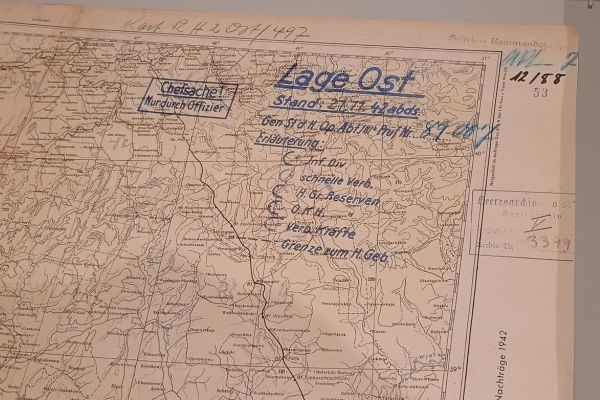
Photographs, Documents and Multimedia Displays
The exhibition underlines its story with a host of documents and photos. The Nazis used photography extensively for visual propaganda, so there is ample data available. One highly interesting multimedia display explains how phots were manipulated and used to manipulate.
But third parties‘ objects have also made their way into the exhibition, including a heart-wrenching diary of a Russian girl documenting the deaths of her family members during the siege of Leningrad.
The Historic Bunker Complex
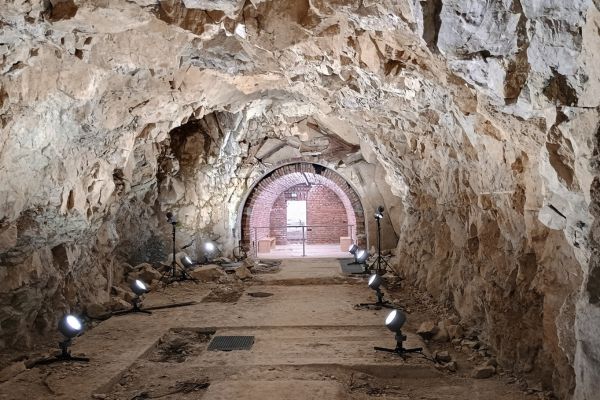
While war was already raging, the Nazis (or rather, forced labor) built an extensive underground bunker system. It was not completed, since the entire Obersalzberg was abandoned in late April 1945 following a British bombing campaign.
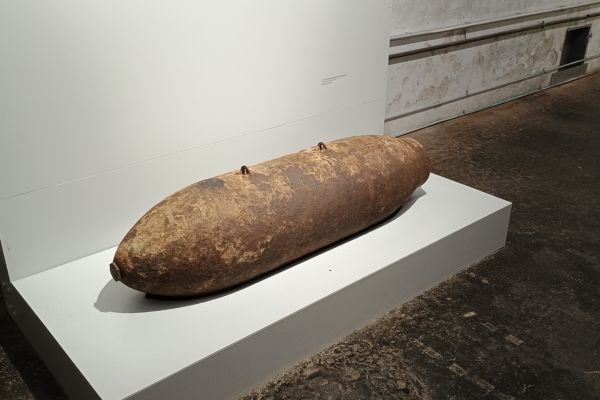
As part of your visit to the documentation center, you will be able to visit parts of the bunker complex. In total, the bunkers are 6 kms (3.7 miles) long. Only a small part of them is accessible to the public.
What Will You Learn About the Obersalzberg?
In five chapters, the permanent exhibition also does a great job highlighting a number of things.
The Berghof Was Hitler’s Real Mountain Residence
Most visitors come to the Obersalzberg to see the Eagle’s Nest high up on the Kehlstein mountain, but that was just a tea house. In terms of Nazi history, it is not very important.
The Berghof, located right there on the Obersalzberg, was where Hitler actually lived. It is where he met foreign dignitaries, held court, and made decisions that would affect most of the world.
The Berghof was part of the idyllic Bavarian stage set, where every move and every image was tightly controlled.
How The Obersalzberg Became a Center of Nazi Power
Hitler first visited the Obersalzberg in 1923. He liked the area and eventually rented, then bought a holiday home there.
So far, so normal. Once the Nazis came to power, the Obersalzberg, a former mountain village turned holiday destination, became the „Führersperrgebiet“, an off-limits area to the general public. The Nazis either bought or expropriated all other buildings there and fenced the entire area in. Entry was only allowed with a special permit.
But this wasn’t just some exclusive mountain retreat where the Nazis spent their summer vacation. This is where a number of Nazi grandees spent a substantial amount of time, where Hitler received foreign dignitaries and where politics was made. The Obersalzberg was the second seat of the government.
Growing up in Germany, I was always vaguely aware that this place called Obersalzberg existed. But I had no idea what had happened there exactly. I am sure my grandmother (born in 1919) had no clue, either.
In fact, I remember her watching a documentation about the Nazis at some point in the 1990s. My normally composed grandmother was livid, sitting in her TV chair and shouting at the television, „They had coffee! They had real coffee all the way to the end [of the war]! We didn’t know where to find food!“ I had never seen her so upset. The Nazis were very good at controlling what information made it out to the public.
(They didn’t just have coffee. The bunkers contained several years‘ worth of food supplies. My grandmother must be spinning in her grave.)
The Myth of Hitler’s Mountain Retreat
The Obersalzberg and surrounding areas are ridiculously pretty. The Nazis, masters in the use of clever imagery to manipulate the public, took full advantage of this stage set.
At the Obersalzberg, Hitler and other grandees were shown relaxing on their porches with dramatic mountains behind them, or interacting with the local population. The Nazis in general pushed the image of Hitler being kind to children and loving dogs. Needless to say, at the same time, elsewhere children were being murdered by the regime for a host of „reasons“.
And that is what the Dokumentation seeks to highlight, as per the title of their permanent exhibition – „Idyll and Atrocity“. In this beautiful landscape, far-reaching decisions with horrific consequences were made.
Practical Information for Your Visit
Opening Hours
Generally speaking, the Dokumentation Obersalzberg (including the bunker complex) is open daily from 9 AM to 5 PM. Last admission is at 4 PM. That is enough time for a quick walk-through with the 40-minute audio tour, but not much more. So if you can, allow more time!
Closing days: November 1, December 24/25/31, January 1.
In addition, the center may occasionally be closed for maintenance for several consecutive days. Make sure to check the website ahead of time.
Tickets
Tickets are currently (September 2026) €4.50 per person. Anyone under 18 visits for free.
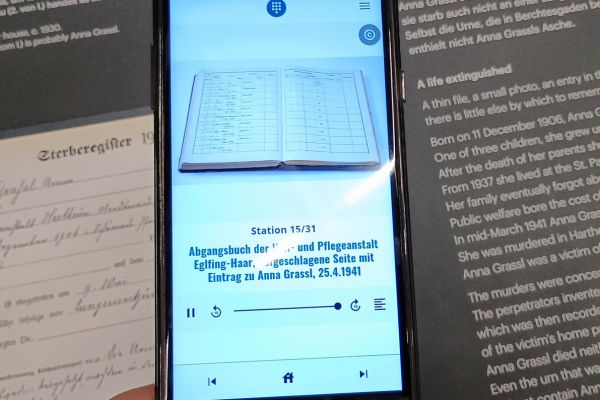
Tickets can be purchased at the ticket desk. They include the multimedia audio guide.
If you have a ticket for the special bus & elevator to the Eagle’s Nest, show it at the ticket desk! You will get free admission.
Multimedia Guide and Languages
As part of your visit, you will get an audio guide for the exhibition. You can choose between a 40-minute and an 80-minute tour. Both are available in German and English. The short tour is available in a few other languages as well.
Getting There & Itinerary
How to Get to the Dokumentation Obersalzberg
By car: Drive towards Berchtesgaden and then follow the signs or your GPS. Large parking lots (payable) are available at the Obersalzberg.
By train from Munich: Catch a train to Freilassing, change to the S-Bahn to Berchtesgaden. From the bus stops in front of Berchtesgaden station, take bus 838 to the „Dokumentation Obersalzberg“. The bus arrives at and departs from a stop just above the restaurant.
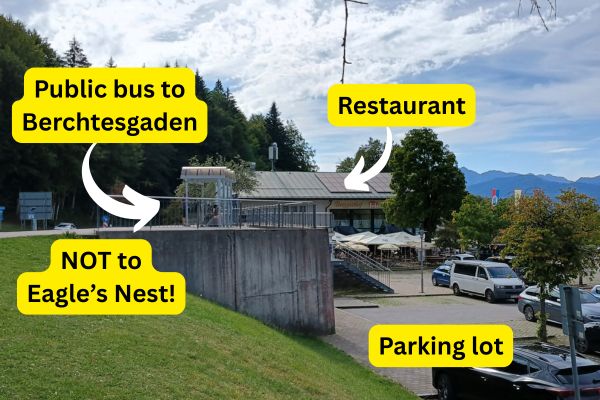
By bus from Salzburg: Catch a bus to Berchtesgaden. At the Berchtesgaden train station stop (the big bus interchange), change to bus 838 to the „Dokumentation Obersalzberg“.
By organised tour: If you visit the Obersalzberg and Eagle’s Nest by organised tour, you will have some time to visit the documentation center. You will not be able to take your time and look at everything in detail, though.
Suggested Visit Itinerary
Try to arrive by 10 AM. The earlier you get there, the better.
If you have not yet purchased your ticket for the special bus to the Eagle’s Nest, do so first. For further details, see my post on Understanding the Eagle’s Nest Last Mile: Tickets & Bus. If possible (and depending on the weather), get a ticket for later in the day, e.g., at 2:20 PM or 2:45 PM. This will allow you to understand the context of the entire area including the Eagle’s Nest.
(If only a few tickets for the Eagle’s Nest bus are left, book whatever departure you can get and fit the rest of your day around your timeslot.)
Then make a beeline for the Dokumentation Obersalzberg. Show your bus ticket to get free admission. Be sure to grab a multimedia audio guide. The audio guide desk is right next to the ticket desk. (Lockers and toilets are located downstairs.)
After your visit to the documentation center, you could
- exit, turn right and walk downhill for a few minutes to see the site of Hitler’s former residence, the Berghof (not much to see there),
- have lunch at the Berggasthof Obersalzberg,
- or just stare at the mountain scenery while your brain is processing the information.
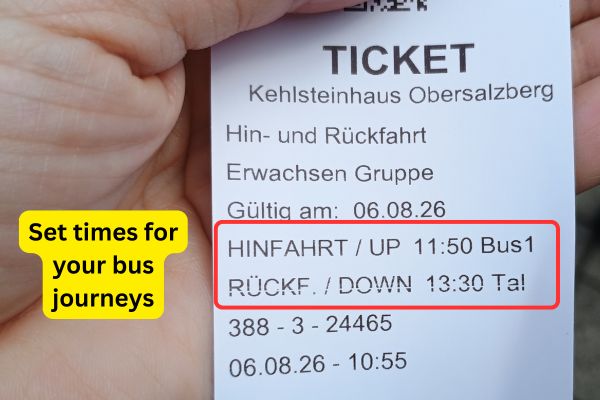
In good time, make your way to the bus stop to catch your assigned bus to the Eagle’s Nest. The official recommendation is to arrive 30 minutes before your departure. That’s a bit much – 15 minutes will do. Your timeslot and bus number are indicated on your ticket.
Enjoy your visit to the Eagle’s Nest. Return at the assigned time.
If you are spending the night in the area, you might want to go into town to decompress at the Watzmann Therme spa.
Dokumentation Obersalzberg FAQs
How Much Time Do You Need at Dokumentation Obersalzberg?
I would suggest allowing 40 minutes at the very least. This will be enough to gain an overview, following the audio guide’s short tour. This tour includes a very short walk through the bunkers.
In order to really absorb information in detail and look at documents and photos, you will need much more time. The official recommendation is to allow 1.5-2 hours. But you will easily be able to fill more time.
I spent 3 hours and did not see everything.
With such a heavy subject, you might also need to take a break or two. 🙁
Is Dokumentation Obersalzberg in English?
Yes. Written information at the exhibition is provided in German and English.
The multimedia guides (available at the ticket desk and included in the admission fee) play information in German and English (40- and 80-minute tour) as well as a few other languages (40-minute tour only).
Can You Visit the Obersalzberg Bunkers?
Yes, you can. The bunker system is (at least partially) accessible through the Dokumentation Obersalzberg.
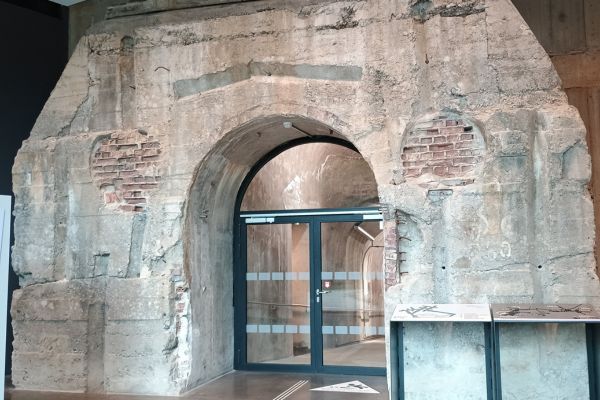
There is no extra charge for visiting the bunkers, but you must have a ticket for the Dokumentation Obersalzberg.
Do You Need to Book Tickets in Advance?
You will typically be able to buy tickets on the day, though in high season there may be a wait at the ticket desk.
You might, however, want to prebook tickets for the special bus to Eagle’s Nest through the official online ticket shop.
Is the Dokumentation Obersalzberg Located in the Eagle’s Nest?
No. The Dokumentation Obersalzberg and the Eagle’s Nest are separate sites.
For a more detailed explanation, see my post Eagle’s Nest vs. Obersalzberg: What’s the Difference?
Eagle’s Nest or Dokumentation Obersalzberg: Which Should You Visit?
Ideally, you will visit both.
If you are on an organised tour, your schedule is structured to include both.
If you are visiting on your own, allow enough time – around 5-6 hours in total. In high season, plan ahead and pre-book tickets for the Eagle’s Nest bus to avoid stress and disappointment.
Can You Visit the Eagle’s Nest and Dokumentation Obersalzberg in One Day?
Yes, you can.
It makes total sense to combine the two. At the Eagle’s Nest, you will see a surviving Nazi-era building that is (almost) in its original state.
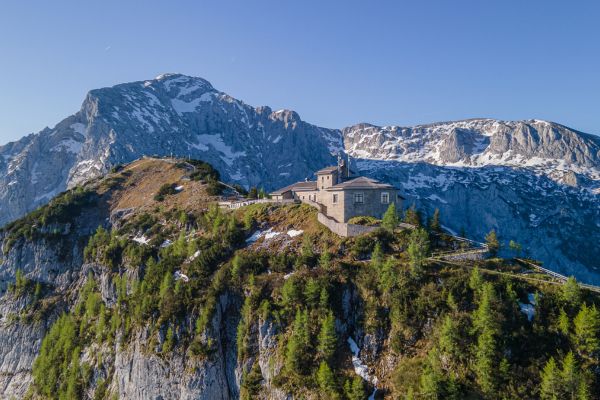
In the Dokumentation Obersalzberg, you will learn about the central role the Obersalzberg played during the Third Reich and the decisions that were made here.
It is going to be a full-day visit. Do make sure you understand the Eagle’s Nest Last Mile: Tickets & Bus before setting out to avoid disappointments!
What is the Recommended Minimum Age for the Dokumentation Obersalzberg?
Due to the nature of the subject matter, the recommendation is that visitors be at least 12 years old.
The exhibition includes photos of the concentration camps and other atrocities.