If you’re planning a day trip to Salzburg from Munich, chances are you already associate the city with two things: Mozart and The Sound of Music. And while both are absolutely part of Salzburg’s identity, they only tell a small part of the story.
To truly appreciate Salzburg, it helps to understand the cultural forces that shaped it, from powerful church rulers to centuries of wealth, music and tradition.
This guide gives you just enough context to make everything you see feel more meaningful, without turning your trip into a history lecture.
Mozart: Salzburg’s Most Famous (and Complicated) Son
No name is more closely tied to Salzburg than Wolfgang Amadeus Mozart.
He was born here in 1756 and quickly became one of the greatest musical prodigies in history. By the age of five, he was composing music. By six, he was touring Europe and playing for royals across the continent. With him on stage was his sister Nannerl, by the way, who was also a hugely talented musician.
But what many visitors don’t know: Mozart didn’t actually love Salzburg.
He worked for the local court (ruled by the prince-archbishop), where he felt underappreciated and restricted. His heart was in opera, but in Salzburg, he was confined to church music. Eventually, after he got fired by the prince-archbishop, he left for Vienna, where he achieved greater success and rose to fame.
Today, of course, Salzburg celebrates Mozart with statues, museums, concerts, and souvenirs everywhere.
Have a Mozartkugel in his honor – the best are made by Fürst.
The Sound of Music: What’s Real and What’s Not
For many North American visitors, Salzburg is inseparable from The Sound of Music.
The film tells the story of the von Trapp family and their escape from Nazi Austria. Several scenes were filmed in Salzburg (to see the filming locations, take a Sound of Music tour, 4 hours). Many others, however, were filmed in a studio in Los Angeles.
Most locals only know about The Sound of Music because American tourists talk about it. Austrians and Germans do not grow up watching the movie. It is, at the end of the day, an American movie made for an American audience. And just in case you haven’t figured it out already – the movie is not an accurate depiction of the family’s life. Just to give you two examples: Maria and the Captain married in 1927, not in 1938; and the family did not hike across the Alps to Switzerland (that would have been a looooong hike), they took a train to Italy.
That said, you’ll still find plenty of recognizable locations. Enjoy the connection and enjoy singing a song or two.
A City Ruled by the Church – and Funded by Salt
Even if you’re not into history, you need to understand two core aspects of Salzburg’s past.
Firstly, governance structures. Salzburg has only been a part of Austria since 1816. For centuries before, the city was an independent principality within the Holy Roman Empire. During this time, Salzburg wasn’t ruled by kings but by prince-archbishops. These were powerful church leaders who controlled both religion and government.
They built palaces and churches and shaped the entire city. We are looking at the result of their unifying vision today. Obviously, they were all-powerful, so they would just go and knock down (literally) whatever was in the way of that vision. This is, for instance, what happened to a number of medieval buildings when the cathedral was constructed.
This central architectural planning is why Salzburg feels so cohesive and elegant.
Secondly, where did all the money come from? Salt. Salzburg translates into „salt castle“. The river Salzach is the „salt river“. There were (and are) large salt deposits nearby. Salzburg was a trading hub for salt and made a lot of money from its strategic location. Really a lot.
Baroque Beauty: Why Salzburg Looks So Perfect
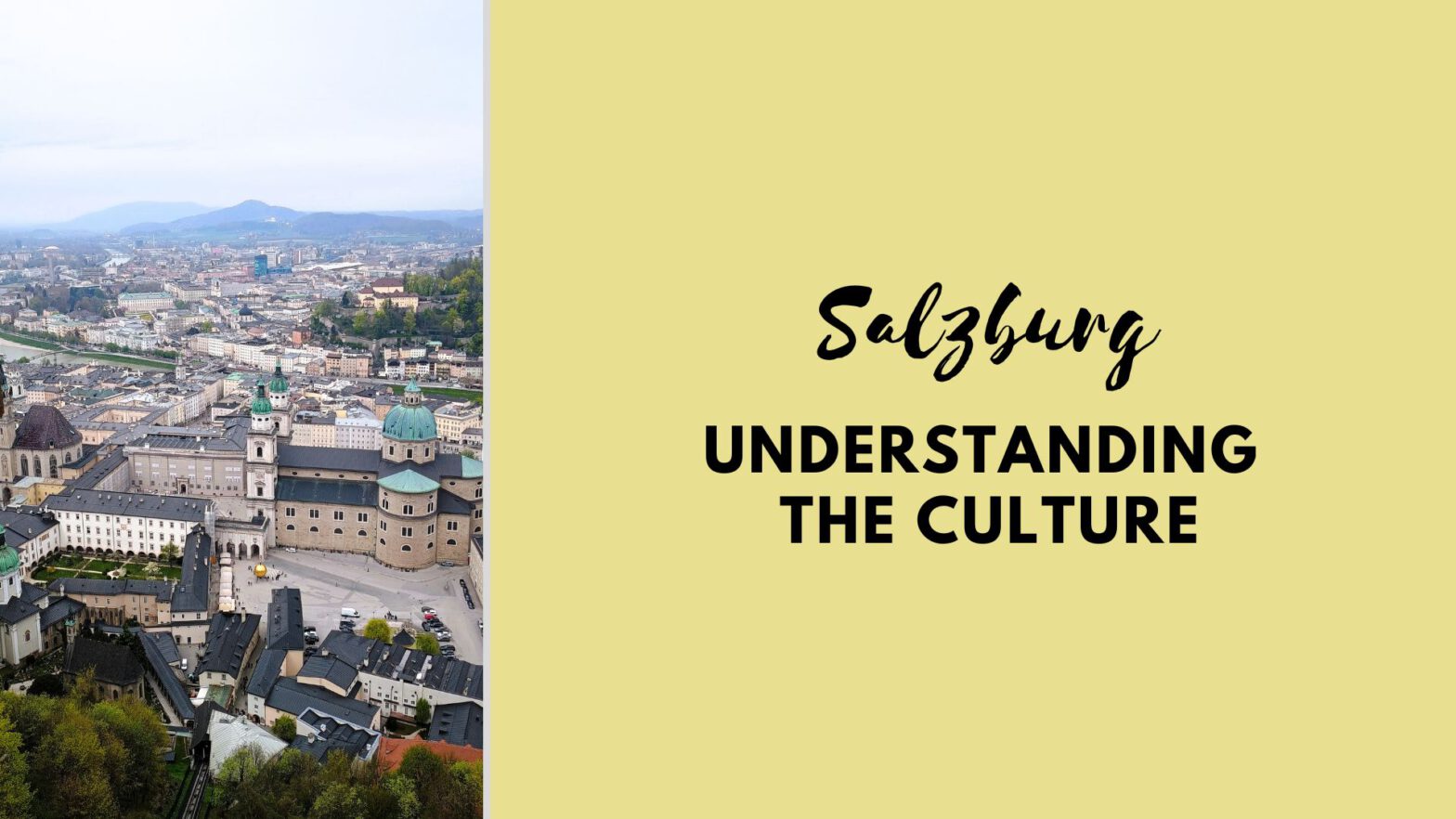
When you walk through the old town of Salzburg, you might notice that everything feels very harmonious. That’s because much of the city was rebuilt in the Baroque style during the 1600s.
Baroque architecture, which originated in Italy, is all about symmetry and grandeur. Humans dominating nature. The goal was to impress, and to reflect the power of the church. The Catholic church, to be precise – Baroque was to be an antidote and a PR instrument in the time of the religious wars of the 1600s.
Not Just the Hills are Alive with Music
Music in Salzburg didn’t die when Mozart left – it’s still alive and kicking. Not just in the hills.
The city hosts the world-famous Salzburger Festspiele every year. This is not some random event. We are talking about a six-week festival that is a major event in the cultural calendar and that attracts top performers in opera, theater and classical music.
Even outside festival season, music is everywhere. You will come across street performers, see adverts for small concerts, and might even stumble into church organ recitals. Or singing tourists in the Mirabell palace gardens. 😉
Culture Shock (in a Good Way): What Feels Different
For many North American visitors, Salzburg may look familiar but feel quite different.
Here are a few cultural nuances to expect:
Slower Pace
Life moves a bit slower here. Meals are meant to be enjoyed, not rushed. More people move on foot or bicycle.
„Slow“ Service
Service is polite but less attentive than in the U.S. Your server won’t check on you every five minutes. That would be considered pushy and annoying in the local culture. If you need anything, just make eye contact.
Quiet Public Spaces
Trains, cafés, and public areas tend to be calmer and quieter.
Strong Sense of Tradition
From architecture to food to festivals, Salzburg values preserving the past. You will also see this in the many traditional shops that still exist in the old town alongside modern chain stores and international brands. Just look at Café Tomaselli, which has been in operation since the early 1700s.
None of this is negative – it’s just different, and often part of the charm.
Salzburg vs. Vienna: Why It Feels Different
Travelers often compare Salzburg to Vienna. But really, the two are quite different. They’ve only been part of the same country since 1816!
Vienna is big, cosmopolitan and shaped by its imperial history. Salzburg, by contrast, is much smaller, intimate and sometimes feels like walking in a storybook.
Salzburg is easier to explore in a day, and everything is within walking distance. That’s exactly what makes it perfect for a day trip. Click here for a 1-day Salzburg itinerary!
What This Means for Your Visit
When you walk through Salzburg, try to look beyond the postcard views. You will notice the consistency of the architecture. Imagine what life was like here in the 1600s and think about the power behind the buildings. And remember: this was once a city ruled by one of the most unique political systems in Europe.
2 Kommentare