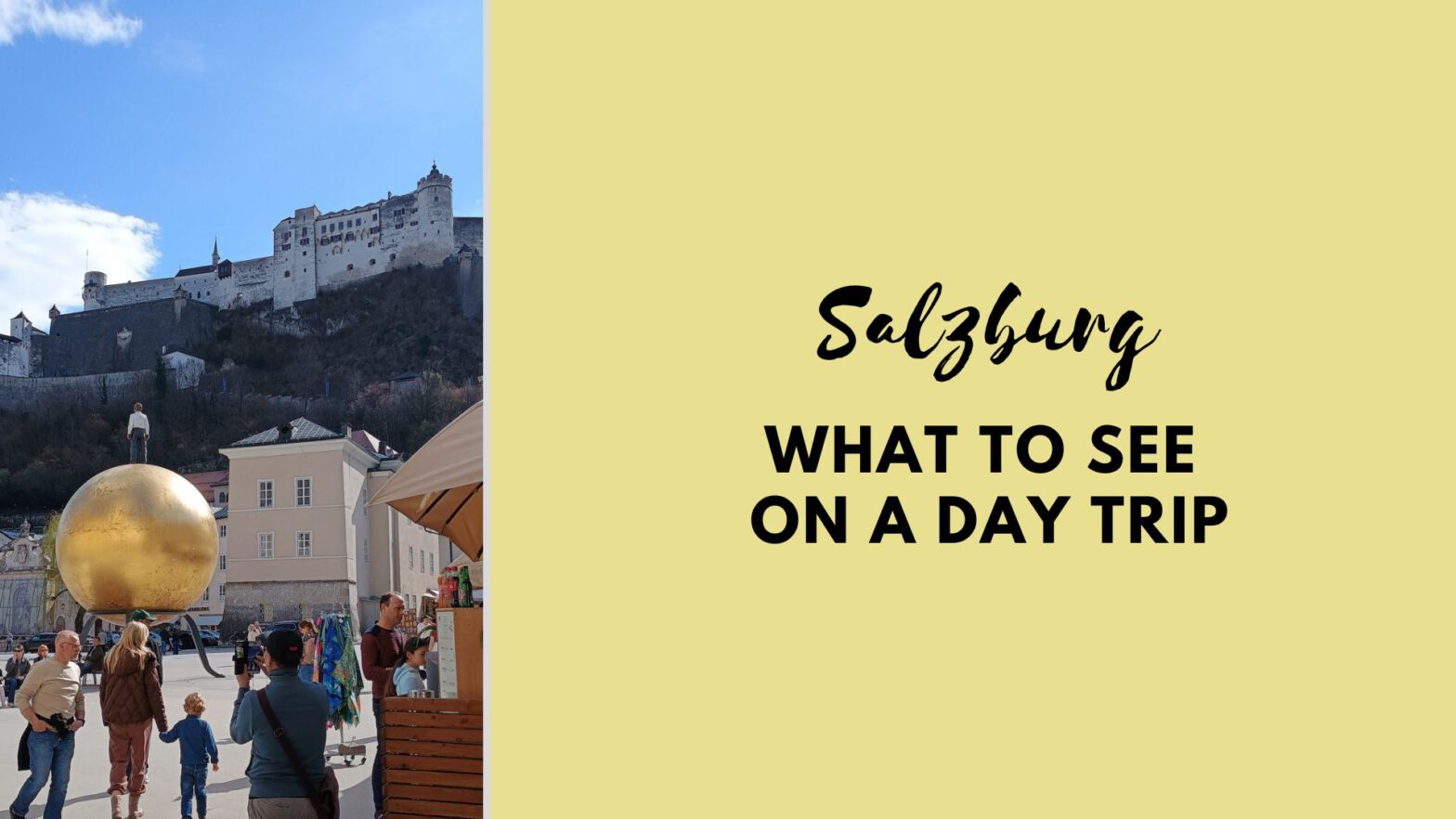
Salzburg, just a two-hour drive or train ride from Munich, makes for a great day trip. Read on to learn about the top sights in town.
Salzburg is a comparatively small city of about 156,000. The old town is very compact. However, there is a lot to see. You will not be bored, but you may be tired. 😄 In that case, plenty of cafés await.
Click here for an easy 1-day itinerary for Salzburg.
A Very Brief History of Salzburg
First came the Celts, then the Romans. Yes, Salzburg is that old.
Modern Salzburg was founded by St. Rupert in 696 CE. Originally, it belonged to Bavaria and became an archbishopric in 798. In the 14th century, Salzburg became an independent principality within the Holy Roman Empire. Its rulers, called prince-archbishops, were both church and worldly leaders. One of them, Wolf Dietrich, had a long-term partner and 15 children. You will come across his name repeatedly.
Wolf Dietrich (ruled 1587-1612) was instrumental in turning Salzburg into the Baroque masterpiece it still is today. His vision was for a Rome of the North. He had been educated in Rome. And thus he set about transforming his hometown. Wolf Dietrich never got to see his project finished, but we are enjoying it today.
In 1816, Salzburg joined the Austrian Empire.
Salzburg means „salt castle“. The river that runs through the town is the Salzach, „salt river“. Both give you an idea of what the main product of the region and the main source of the city wealth was. Salt. There are huge salt mines in the area, particularly in Hallein. („Hall“ is another word that means „salt“.) The wealth derived from the salt trade went into the many Baroque buildings that you see all around the old town.
As an aside, Munich also exists thanks to the salt trade. But that’s another story. 😉
Sights in Salzburg Old Town
The old town, much of which is medieval or Baroque, is a sight in its own right. You can just wander around for a few hours, enjoy the architecture and connecting courtyards, or duck into small alleys to discover small shops and eateries. In case you were even wondering, yes, the old town is a UNESCO World Heritage Site.
Fortress Hohensalzburg
The fortress towers above the city. First built in 1077, it is one of Europe’s largest castle complexes.
The fortress was never attacked, but in 1803, the city surrendered to Napoleon.
You can visit the fortress by walking up the hill or taking a funicular. You have to pay for both (even if you just want to enjoy the view), and taking the funicular is only a little more expensive. So especially if you are in a bit of a rush, do take the easy way up (and down).
There are two ticket options: a basic ticket and an all-inclusive ticket. With a limited amount of time, the basic ticket will be more than enough.
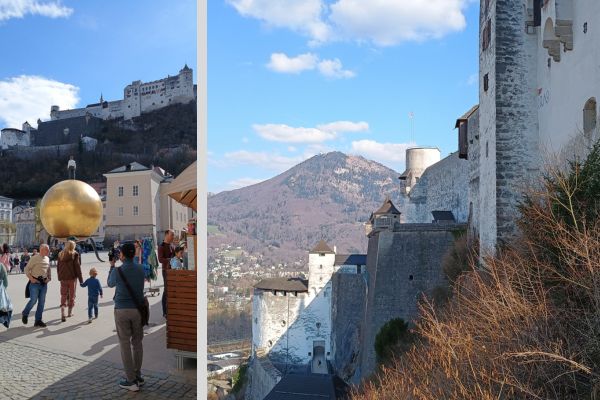
Buy your tickets online for instant access. Take the funicular up, then turn left for the first panoramic terrace. Climb the stairs to the tower and follow the signs for „Panorama Route“. It will take you through several rooms with historical information and up various staircases, until you emerge at the highest viewing platform. This platform can be a bit miserable in poor weather.
You will then have to descend quite a few steps again to emerge next to the chapel. From there, turn left to reach the footpath back down to town, or turn right for the funicular. If you have more time, you will find a bunch of museums in the fortress, as well as state rooms (for which you need the all-inclusive ticket).
There are three cafés/restaurants up at the fortress, though they don’t get the best reviews.
Salzburg Cathedral
Salzburg’s original cathedral was consecrated in 774. After it burned down in 1598, it was rebuilt in the Baroque style along with the surrounding area. This whole construction project was launched by Wolf Dietrich.
Above the main door, you will notice the numbers 774, 1628 and 1959. These refer to the years in which the cathedral was consecrated: first the original cathedral (774), then the current cathedral (1628), and lastly the current cathedral again after all the damage from WWII was repaired (1959).
Mozart was baptised here a day after he was born, and later served as the chief organist.
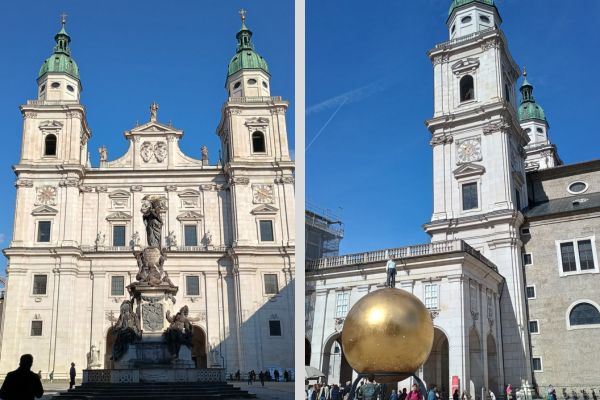
To visit the Cathedral’s interior, you have to buy a ticket.
Alte Residenz
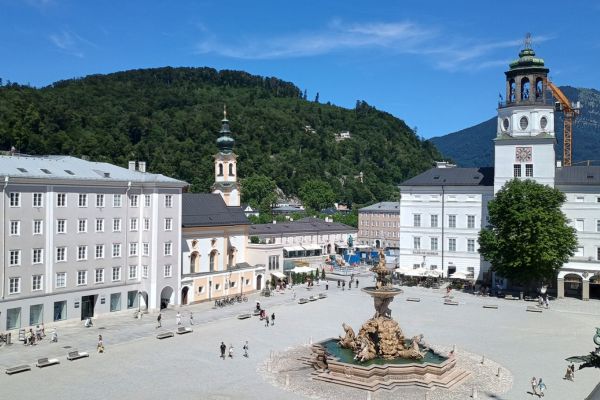
Another Baroque building opposite the Cathedral, this is where the prince-archbishop lived. It was conveniently connected to the Cathedral by a skywalk so the ruler wouldn’t have to mix with the commoners on his way to church.
Today, the Residenz gives you access to the DomQuartier, a series of museums including the State Rooms and the cathedral museum. During your visit, you will, among other things, get to walk on top of the skywalk and past the cathedral organ. When I was there on a hot day in July, it was delightfully cool and quiet.
Neue Residenz
The new residence sits directly across the square from the old one. It houses the Salzburg Museum, the Glockenspiel and a shop that specialises in local arts and crafts.
St. Peter Cemetery
St. Peter’s cemetery is among Europe’s oldest burial grounds. It has been in use for about a thousand years and is still active today. In Austria, burial plots are rented for 10-year-periods. So if a family stops paying, the plot will go to somebody else.
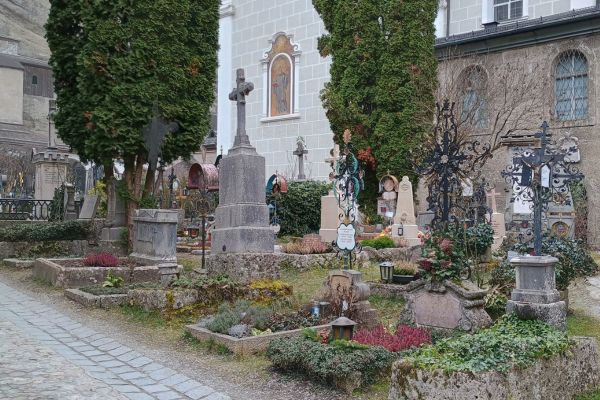
The catacombs up in the rock face are really small chapels. No one is buried there. You can visit them for a small admission fee. The ticket office is located in Tomb 54, where Mozart’s sister Nannerl and Michael Haydn, Joseph’s brother, rest.
The gated tombs at ground level served as the inspiration for where the von Trapp family hides from the Nazis. However, the scene was filmed on a set in Los Angeles.
St. Peter’s Church
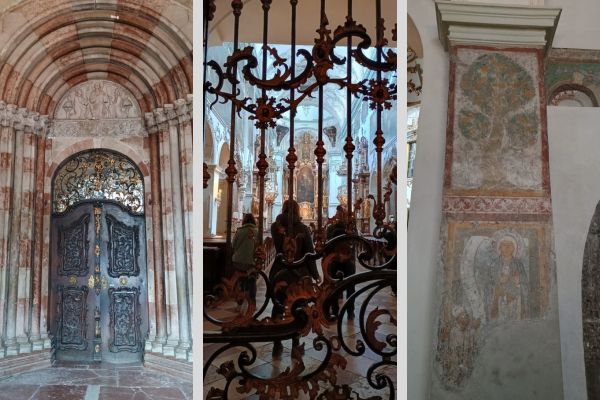
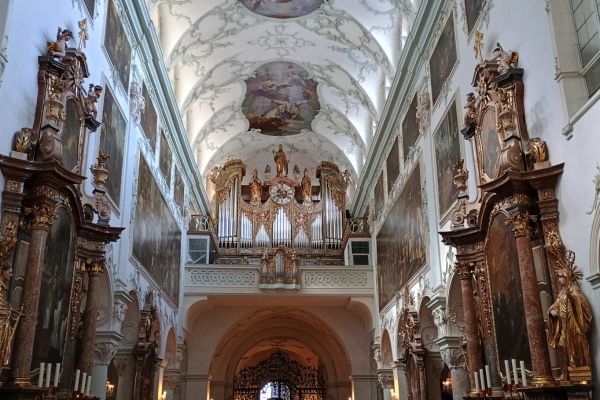
In the next courtyard, St. Peter’s church awaits. It is the abbey church for the Benedictine arch abbey St. Peter and was built in the 12th century. The interior is very beautiful. Do pop in for a short visit if it’s open.
Getreidegasse
Salzburg’s most famous street is fully pedestrianised. Except for its occupants, this street hasn’t changed all that much in centuries. Every shop has an iron sign above the door – this was useful back in the days because most people were illiterate. If they needed a key made, they would look for a sign with a key.
Today, businesses are still required to have this kind of sign out, and it adds to the street’s special character. Even McDonald’s complied (they have since closed).
While walking down Getreidegasse, do make sure to duck into the little alleyways that branch of to the right and left. There are lots of shops and cafés to be discovered.
Mozart’s Birthhouse
Yes, Wolfgang Amadeus Mozart was born in Salzburg in 1756. The house in which he was born – the family’s home for many years – is now a museum. Admission is currently €15, or €23 for a combination ticket for the Birthhouse and the family’s later residence.
From the ticket office (1st floor European/2nd floor American) you walk up to the family’s apartment. The rooms are really quite big and you will see the room in which Mozart was born. One floor down, there is an exhibition about stage models and other items related to his opera, as well as a café.
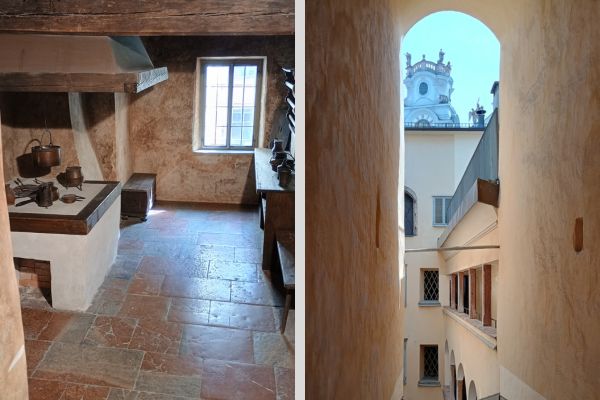
A visit takes about 40-60 minutes.
If you want my honest opinion: I found the museum very expensive for what it had to offer. There is just not a lot to see. Unless you are a huge Mozart fan, I would argue it’s ok to skip and spend more time either at the fortress or just wandering around town.
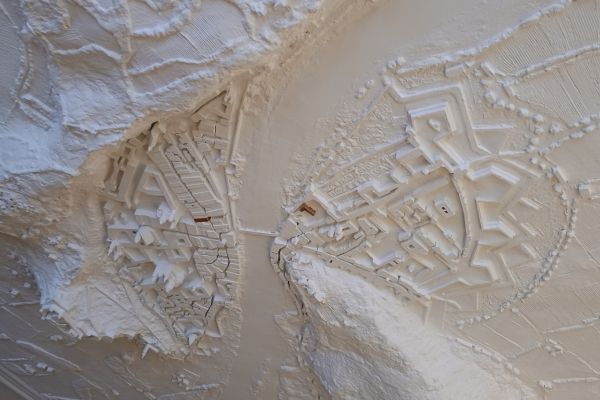
Sights in Salzburg New Town
Mirabell Palace & Gardens
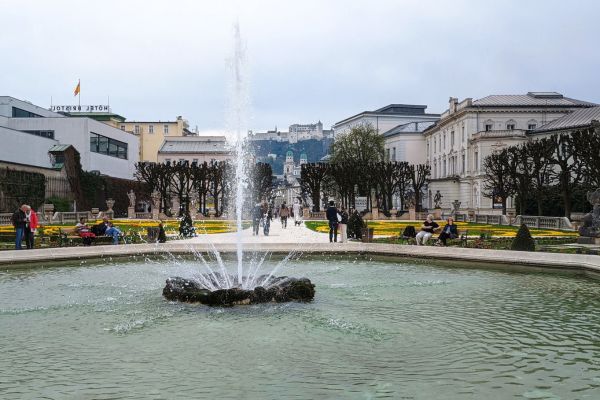
This palace was originally built by prince-archbishop Wolf Dietrich for his not-so-secret lover, Salome Alt, and their 15 children. At the time, it was outside of the city. After Wolf Dietrich’s arrest, his successor kicked out the mother and children. The palace was eventually rebuilt to become a Baroque masterpiece. Today, it houses the mayor’s office. Its marble hall, once Wolf Dietrich’s dining hall, is a popular wedding and concert venue. Mozart himself performed here!
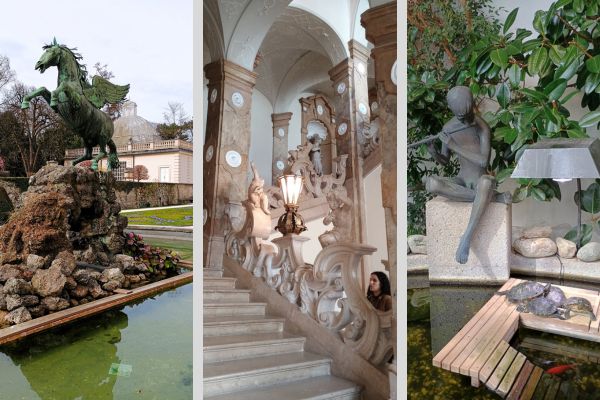
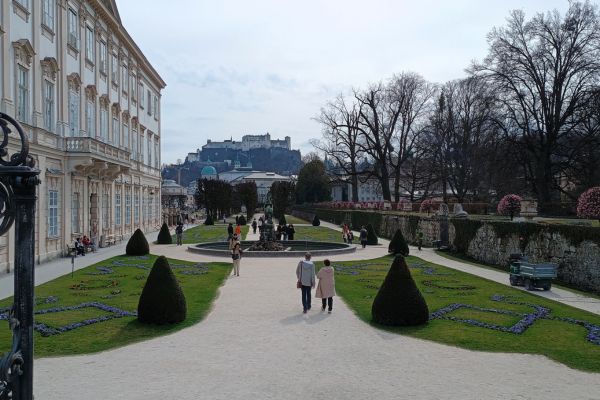
The gardens, too, are Baroque, meaning they are highly geometrical. At the time, it was believed that humans could perfectly control nature. This is reflected in the garden design.
The pegasus statue (the horse with wings) was originally cast for a horse pond on the big square by the cathedral. There is a famous dwarf garden that houses the marble statues of 17 dwarfs. There once were 28 of them, but they were all sold in early 19th century. A good hundred years later, only 17 of them could be bought back.
If you’re into The Sound of Music: This is where the Do-Re-Mi song happens.
Mozart Residenz
The Mozart family eventually moved from their home in Getreidegasse to a building across the river. This place is now also a museum, although, from what I understand, it is (even) less interesting than the Birthhouse. Admission is €15 or €23 for a combined ticket with the Birthhouse.
Hotel Sacher
The original Hotel Sacher is in Vienna. Its Salzburg sister was founded as Österreichischer Hof in 1866 and became a Sacher in 2000. The hotel has a café and a shop where the famous Sachertorte chocolate cake is sold. Unsurprisingly, it’s pricey.
Museums in Salzburg
- Salzburg Museum (currently closed).
- DomQuartier. Visit the State Rooms of the Residenz, the Residence Gallery, the Cathedral Museum and the Museum of St. Peter on one ticket.
- Christmas Museum. Christmas traditions between 1840 and 1940.
- Museum der Moderne. Modern art up on the hill and in town.
- Museum of Lost Generation Art. Showcases artists who were deemed „degenerate“ by the Nazis.
- Haus der Natur. Salzburg’s museum of natural history.
Is a Day Trip Enough for Salzburg?
Salzburg is a compact city, but it has a lot to see and do. A day trip will allow you to see pretty much all the places mentioned above by walking around, to have a sit-down lunch, and to visit one sight. But you will not be able to really linger anywhere, or to visit any museums at leisure.
You could of course make it a very long day by setting out on the first train from Munich: at 5:52 AM. This train gets you into Salzburg at 7:50 AM, just in time for breakfast.
If that’s not your thing and you would like to explore in more depth and/or take a Sound of Music tour (see below), I would strongly recommend spending at least one night in Salzburg.
The Sound of Music in Salzburg
The Sound of Music is set in Salzburg, which was also one of its filming locations. You will see various filming locations in the city, but not all. Some, such as the chapel where the wedding scene happens, are outside of the city. To see them, you will have to either drive, or book a tour. A Sound of Music Tour takes four hours.
If you would like to add this tour to your itinerary, I would strongly suggest spending at least one night in Salzburg. Otherwise, you will have to rush around like crazy, or it will be a very long and very exhausting day.
Mozart Tours in Salzburg
Wolfgang Amadeus Mozart was born in Salzburg in 1756. Today, the house in which he was born and the apartment to which his family later moved, are open to visitors.
Just down the street from the Geburtshaus is a restaurant called Zum Eulenspiegel. Mozart’s father moved into the apartment above the restaurant in the late 1700s.
Mozart doesn’t seem to elicit enough excitement for public tours. However, several tour guides offer private Mozart-themed tours. You will find them with the help of your preferred search engine.
How to Get to Salzburg
You can easily and affordably reach Salzburg by train from Munich. The journey takes just under two hours.
My top tip for using the trains anywhere in Germany is to download the DB Navigator app. It lets you check for trains (even outside of Germany) and indicates delays quite reliably. To buy tickets in the app, you need an account and of course an internet connection. Tickets for trips within Germany (and in some cases abroad, such as Salzburg) are then delivered in the app so you just need to show the QR code when your ticket is checked.
2 Kommentare